
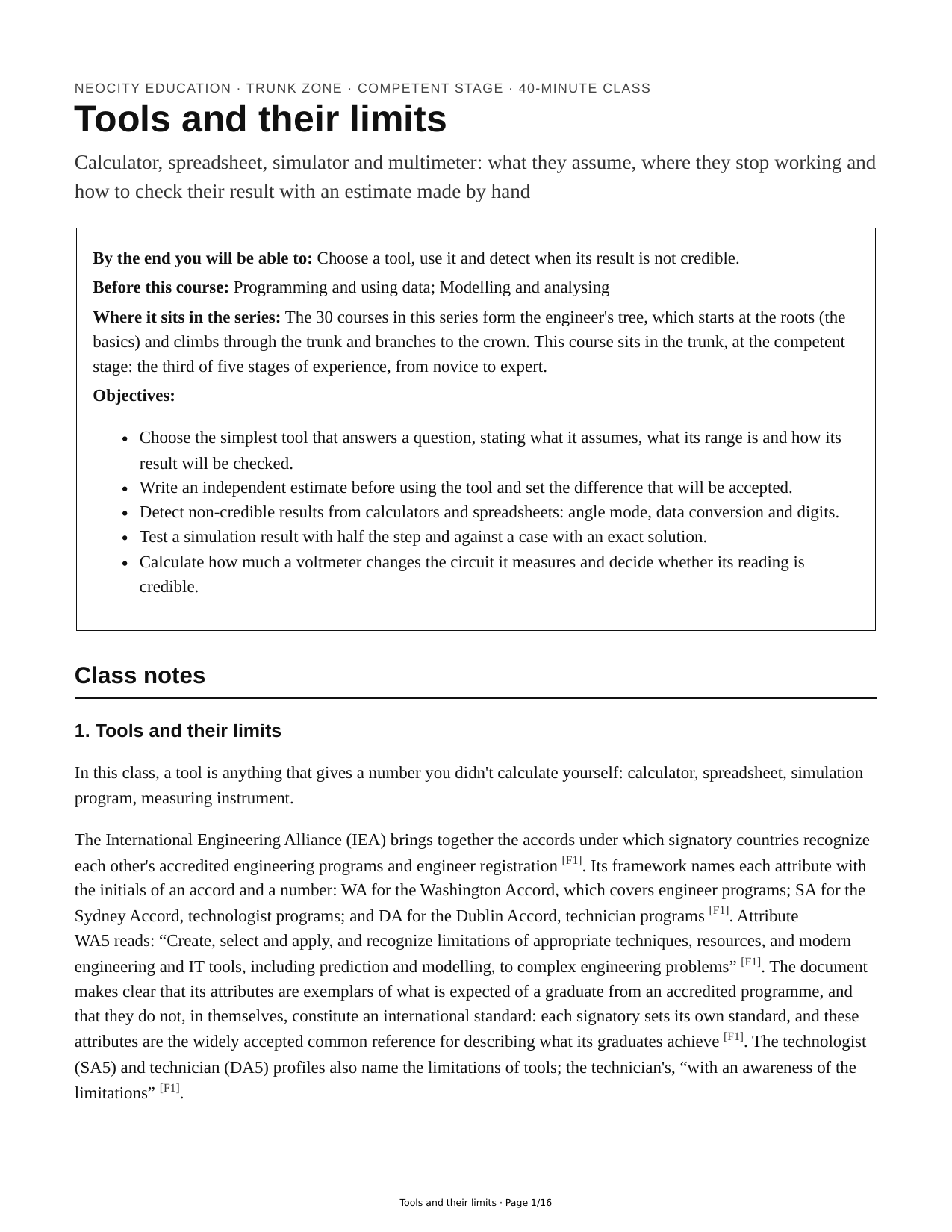
Tools and their limits
Calculator, spreadsheet, simulator and multimeter: what they assume, where they stop working and how to check their result with an estimate made by hand
5 USD
In Chile the charge is made in pesos at the observed dollar rate on the day of purchase.
Available for purchase soon
Meanwhile, look through the sample pages. To hear when sales open, write to contacto@neocity.cl.
What it includes
- Pages
- 16
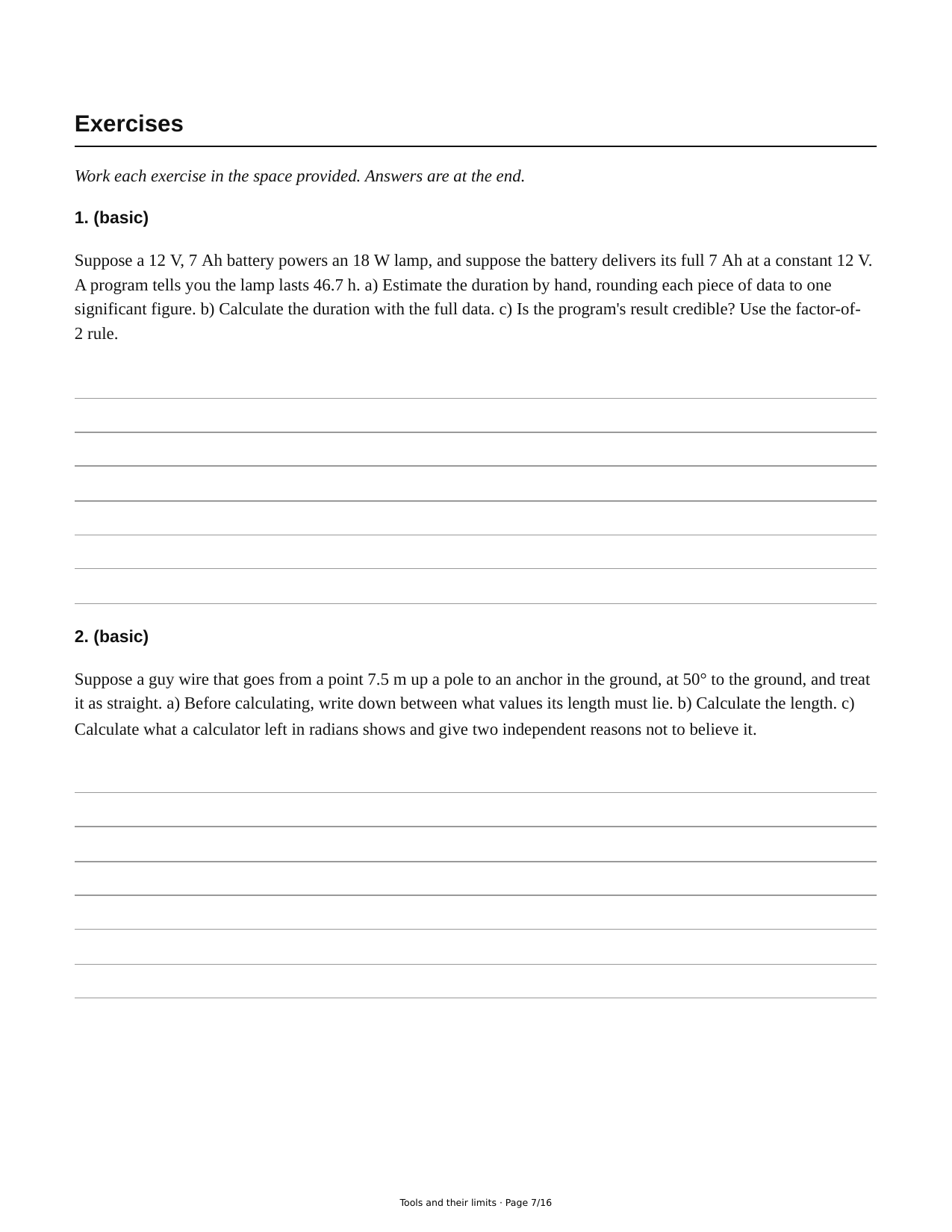
- Exercises
- 8: 3 basic, 3 intermediate and 2 challenge; 5 with a numerical answer
- Sources cited
- 8
- Class
- 40-minute script
- Format
- US Letter PDF and script as text
- Zone of the tree
- Trunk
- Stage
- Competent
When you finish you will be able to
Choose a tool, use it and detect when its result is not credible.
What you learn
- Choose the simplest tool that answers a question, stating what it assumes, what its range is and how its result will be checked.
- Write an independent estimate before using the tool and set the difference that will be accepted.
- Detect non-credible results from calculators and spreadsheets: angle mode, data conversion and digits.
- Test a simulation result with half the step and against a case with an exact solution.
- Calculate how much a voltmeter changes the circuit it measures and decide whether its reading is credible.
Who it is for
Young people aged 16 to 24 who study engineering or a technical trade, already program simple calculations and write down the assumptions of a model. Examples from electrical engineering; anything the student measures is measured only on cells and 9 V batteries, with the multimeter on voltage.
Before this course
Sample pages
Class video
PDF + script; the class video arrives once it is recorded.